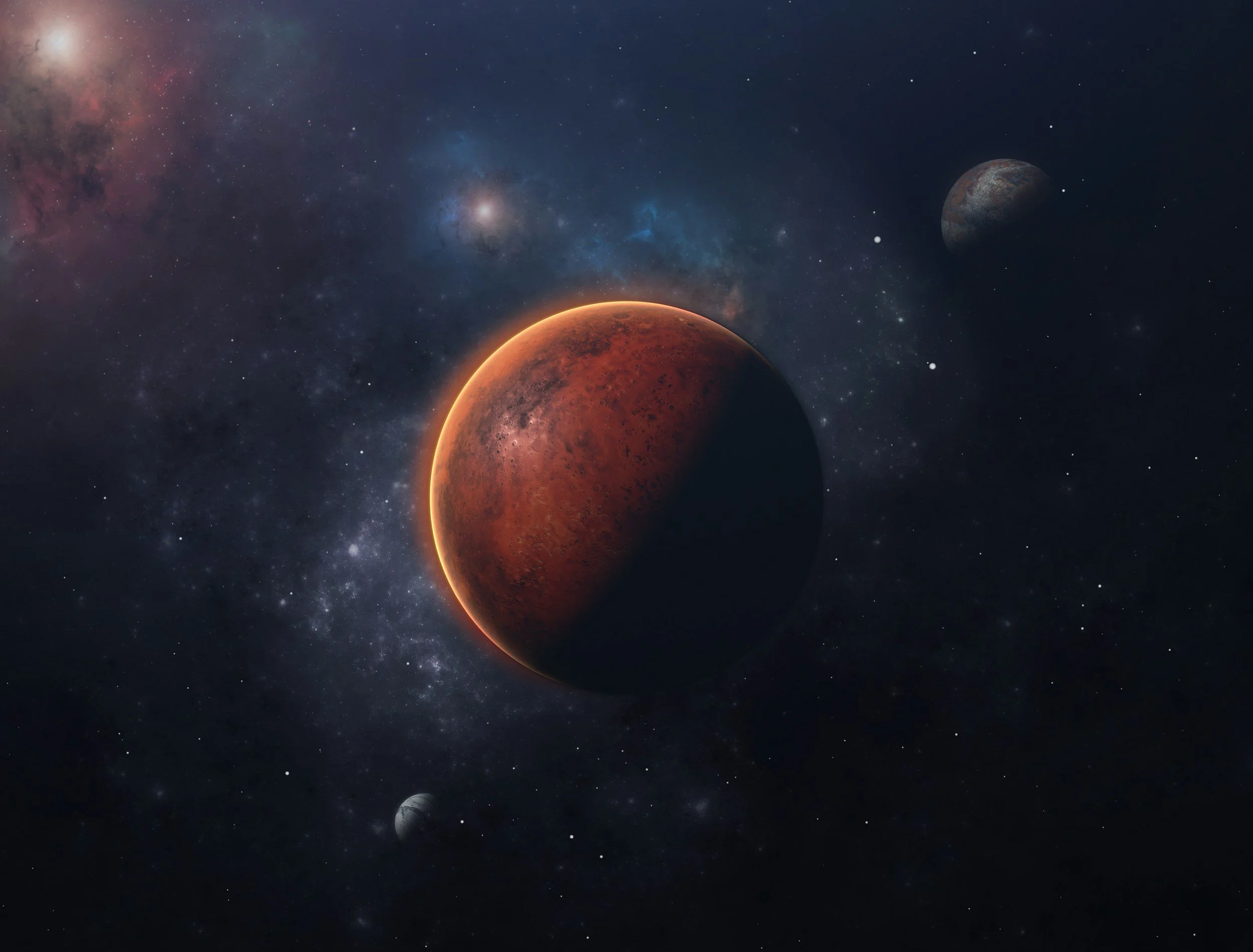
New study explains why is Mars red
For years, spacecraft have studied Mars and revealed ancient signs of lakes and rivers that suggest the planet once had liquid water. New research is now clarifying why Mars is covered in red dust.
According to a recent study published in Nature Communications, the red colour of Mars comes from iron oxides, also known as rust. This rust forms when liquid water is present, further supporting the idea that Mars once had water on its surface.
Colin Wilson, a project scientist for the European Space Agency's ExoMars Trace Gas Orbiter and Mars Express, explains that while Mars' atmosphere is extremely dry, this research shows that the rust on Mars is not as dry as previously thought.
"The atmosphere of Mars is only a few hundredths of a percent water vapour, so it'll be an extremely dry form of rust. But this latest research, conducted through a combination of observations from European and American orbiters and landers, shows that the kind of rust we get on Mars is much more like the rust we are familiar with on Earth—it has significant water content," Wilson said.
The study, led by Adomas Valantinas of Brown University, reveals that Mars' rust is similar to Earth's but with a higher water content. This finding changes how we understand Mars' red hue. Valantinas says, "Our study confirms previous findings that there was liquid water, but it changes our understanding of why and how Mars rusted. Now we know that Mars rusted when liquid water was present, and there must have been some form of oxygen—possibly from the water, air, or other sources—that helped the rusting process."
Mars, however, lacks rainfall, meaning the rust that formed billions of years ago has stayed on the planet's surface. "Mars does not have precipitation. There's no rainfall, so all this material is being eroded by winds and spread across the planet. But it’s not washed away. On Earth, dust like this is eventually cleaned up by rain. Imagine the Saharan desert dust that sometimes reaches Europe from Africa—it covers everything, but rainfall washes it away," Valantinas explained.
This discovery brings scientists one step closer to understanding the past of the Red Planet.
Reference
By Rédaction Africanews
New study explains why is Mars red
Available at https://www.africanews.com/2025/02/26/new-study-explains-why-is-mars-red/
(Assessed: 12th May 2026)