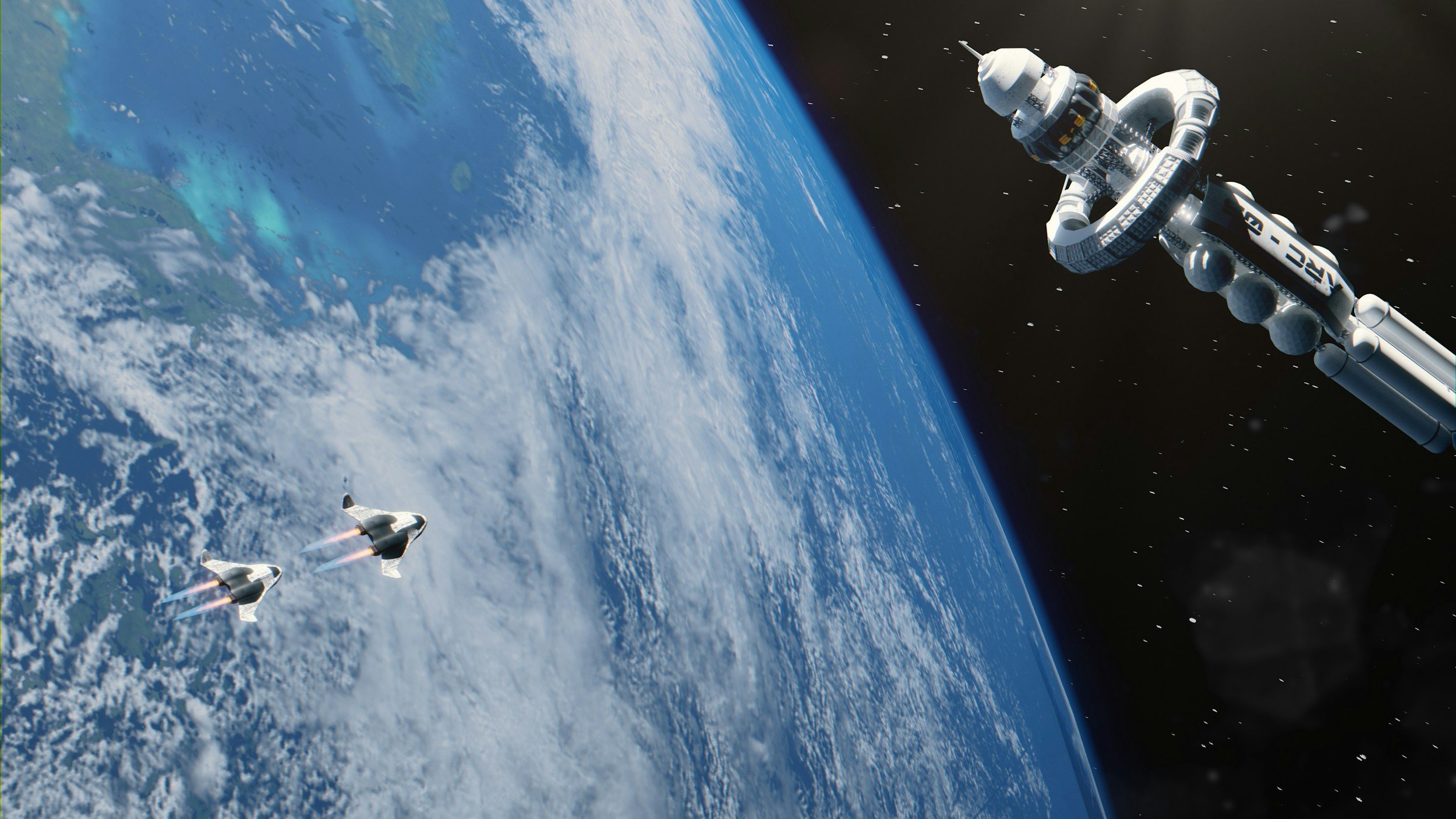
Voyager ‘very optimistic’ about Starlab
Voyager Technologies said it is ready whatever direction NASA decides to take regarding support of commercial space station development. In March, NASA released a proposed new path for its Commercial Low Earth Orbit Destinations, or CLD, program in which the agency cited concerns that a commercial market had not formed and stated it was exploring a procurement of a new ISS core module commercial modules could latch onto as a lead to independent stations.
NASA accepted comments on those plans via a request for information that was due last month and companies now await the agency's decision on whether it will take that new path for CLD or continue down the path of supporting the development of one or more stations intended to be ready before the ISS is decommissioned in late-decade. Dylan Taylor, Voyager's CEO, said on May 5th, during an earnings call for first quarter financial results, that its Starlab Space joint venture with Airbus, MDA Space, Mitsubishi and others had technology and market traction to serve either path forward. "We're still very, very optimistic about Starlab in the program, because either direction NASA takes, whether it's a core module with commercial modules attached, or it's commercial free flyers, we think we have the technology and, in particular, the market traction to service both those models."
Taylor did not detail what an alternate Starlab service offering would look like under a core module path; some in the industry believe a core module approach would take some time to develop and utilize valuable resources instead that could be applied toward supporting commercial stations. Taylor pointed to the existing market demand for the station, saying that payload accommodations were oversubscribed; "We were already at 130% of commercial demand capacity spoken for on Starlab, and that commercial demand could translate to a different solution if NASA goes a different path." The company's CFO, Phil de Sousa, expects Starlab to begin generating commercial revenue by 2027 via such means as astronaut training and converting payload reservations into contracts.
The companies working on Starlab have supported the program through equity stakes and via a NASA Space Act Agreement that, so far, had provided Voyager with $24 million for completing four milestones. Taylor said Starlab was well-positioned for a potential CLD Phase 2; "I think we're very well positioned for CLD Phase 2, but it's not out of the realm of possibility that we could independently finance this." He does not think it will be necessary because NASA and other ISS partners will be looking for station capabilities post-ISS decommissioning although although there have been proposals to extend ISS operations through 2032, Taylor seemed skeptical that such extensions would occur. "Could we capitalize this independent of NASA? I don't think that's going to end up having to be the case." He said that even if the company had to independently fund Starlab, major space agencies world-wide would be integral in making that a reality.
Reference
by Jeff Foust
Voyager ‘very optimistic’ about Starlab amid potential NASA changes
Available at https://spacenews.com/voyager-very-optimistic-about-starlab-amid-potential-nasa-changes/
(Assessed: 12th May 2026)